
Diversity & Inclusion in Life Sciences: More Than a Buzzword
Introduction
The life sciences industry is built on discovery, innovation, and the pursuit of better health outcomes. But one critical driver of innovation often gets overlooked: diversity and inclusion (D&I).
D&I is not just a corporate slogan or a box-ticking exercise—it’s a powerful business strategy. Diverse teams bring broader perspectives, more creativity, and stronger decision-making. In life sciences, this translates directly into better patient outcomes, faster problem-solving, and a stronger competitive edge.
At Talentverve HR Consulting, we believe D&I is a necessity, not an option. In this blog, we explore why diversity matters in life sciences, the challenges organizations face, and the strategies to make D&I a genuine driver of growth.
1. Why Diversity & Inclusion Matter in Life Sciences
a) Innovation Through Different Perspectives
Drug discovery, device development, and clinical research thrive on problem-solving. A team composed of people with different backgrounds, experiences, and thinking styles is more likely to generate breakthrough ideas than a homogenous group.
b) Better Patient Representation
Life sciences companies serve diverse populations. A workforce that reflects patients’ diversity helps ensure that products, trials, and marketing strategies are inclusive and representative of real-world needs.
c) Stronger Regulatory & Compliance Alignment
Global regulators, including the FDA and EMA, increasingly emphasize diversity in clinical trials and company culture. Organizations with inclusive practices are better positioned to meet compliance expectations.
d) Attracting and Retaining Talent
Top professionals—especially younger generations—prioritize working with companies that value inclusivity and equality. Failing to embrace D&I risks alienating high-quality candidates.
diversity isn’t just about fairness—it’s about business performance, innovation, and patient trust.
2. The Current State of D&I in Life Sciences
Despite growing awareness, the industry faces persistent challenges:
- Leadership Gaps: Women and minority groups remain underrepresented in executive roles.
- Pipeline Challenges: Barriers in education and training reduce access for underrepresented groups.
- Clinical Trial Imbalances: Trials often fail to recruit diverse patient populations, limiting outcomes.
- Cultural Resistance: Some organizations still see D&I as a “soft” HR initiative rather than a business imperative.
A 2023 industry survey revealed that while 85% of life sciences companies claim to prioritize D&I, less than 40% have measurable strategies or metrics in place.
This gap highlights the need for a structured, intentional approach to inclusion.
3. Building a Truly Inclusive Workforce
a) Leadership Commitment
D&I initiatives must be driven from the top. Executives who model inclusive leadership set the tone for the entire organization.
b) Recruitment Practices That Expand the Talent Pool
Companies must look beyond traditional pipelines and actively recruit from underrepresented groups, universities, and professional networks. Tools like blind resume reviews can help minimize unconscious bias.
c) Inclusive Clinical Research
Representation shouldn’t stop at the workforce—it must extend to clinical trial recruitment, ensuring therapies are safe and effective for all populations.
d) Training & Awareness Programs
Employees at every level should receive unconscious bias training and inclusive leadership workshops to foster a supportive culture.
e) Metrics & Accountability
What gets measured gets managed. Tracking hiring, promotion, and retention data by demographics ensures D&I progress is tangible.
4. Common Barriers to D&I—and How to Overcome Them
- Barrier 1: Lack of Awareness
Many employees and leaders underestimate unconscious bias.
Solution: Implement continuous training and open discussions around inclusivity. - Barrier 2: Talent Pipeline Shortages
Underrepresented groups may not have equal access to STEM education.
Solution: Build partnerships with universities, sponsor training programs, and create scholarships. - Barrier 3: Resistance to Change
Employees may perceive D&I as a “quota system.”
Solution: Emphasize how inclusion benefits the business, innovation, and patient outcomes. - Barrier 4: Limited Resources
Smaller organizations may lack dedicated D&I teams.
Solution: Start small—focus on achievable initiatives such as mentorship programs or targeted recruitment.
D&I is a long-term cultural shift, not a one-time project.
5. The Role of Diversity in Clinical Trials
One of the most pressing areas for diversity in life sciences is clinical research. Historically, clinical trials have underrepresented women, minorities, and elderly populations—leading to biased data and less effective treatments.
Building diverse research teams helps ensure:
- Recruitment strategies resonate across patient demographics.
- Trials capture data that reflects real-world populations.
- Regulatory approval processes move more smoothly.
For example, a biotech firm that actively recruited multilingual clinical coordinators significantly improved minority participation in trials, strengthening both compliance and patient outcomes.
6. Case Study: Embedding Inclusion in a Biotech Startup
A U.S.-based biotech startup struggled to attract diverse candidates for its R&D team. Their hiring pipeline leaned heavily on a single network of universities, resulting in limited representation and groupthink.
Talentverve stepped in to:
- Broaden Candidate Sourcing: Engaging with minority-focused STEM associations.
- Implement Blind Screening: Removing identifying details from resumes during initial shortlisting.
- Create Inclusive Onboarding: Training managers on cross-cultural collaboration.
Result: Within one year, the startup’s R&D team grew by 40% with greater gender and ethnic diversity, leading to new product design approaches and higher employee satisfaction scores.
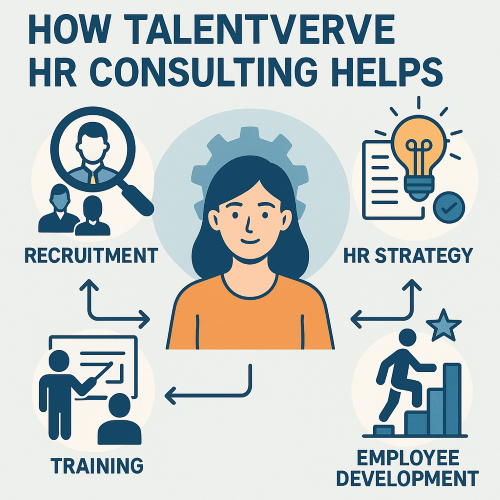
7. How Talentverve HR Consulting Supports D&I in Life Sciences
We help organizations move from intention to execution by offering:
- Inclusive Recruitment Strategies: Expanding access to diverse talent pipelines.
- Talent Intelligence Insights: Mapping where diverse candidates are most concentrated globally.
- Employer Branding Support: Positioning companies as inclusive, mission-driven employers.
- Bias-Free Hiring Practices: Implementing screening tools and structured interviews.
- Leadership Development: Coaching leaders to champion inclusive practices.
Our approach ensures D&I isn’t just a slogan—but a measurable business advantage.
Conclusion
In the life sciences industry, where the stakes are measured in lives, diversity and inclusion cannot remain a buzzword. They are essential to innovation, patient safety, and long-term growth.
Building inclusive teams leads to better science, stronger compliance, and healthier workplaces. For organizations, the challenge is clear: treat D&I as a strategic priority, not a checkbox.
At Talentverve HR Consulting, we empower life sciences companies to build diverse, agile, and inclusive teams that can meet the challenges of tomorrow.
Diversity isn’t just good ethics—it’s good business. Let’s work together to build a truly inclusive future in life sciences.